Z'BRDA · SCIENCE
The record you can't buy
13 August 2026 · Nino Ciglenečki & Iris · hrvatski
Solar cells have broken through a ceiling silicon will never reach. Then you see how big the record piece is and how long it lasts - and the story gets much better.
The number going round solar energy news: 34.85 %.
And it’s true. LONGi, April 2025. The best silicon cell in a lab sits at 26.8 %, the panel on your roof at around twenty. Silicon has reached its own limit and stays there, and this lot got past it by stacking two layers - perovskite on top catching the blue and green, silicon underneath picking up the rest. No sorcery, just two layers instead of one.
Then you look at how big the record piece is
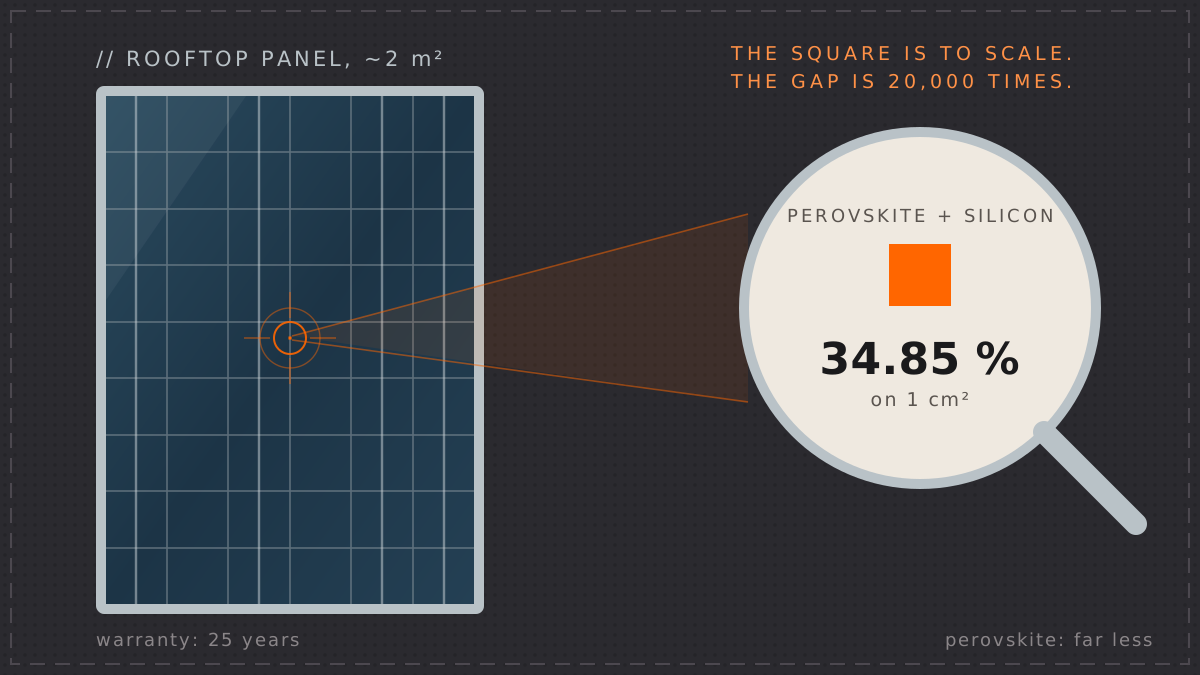
One square centimetre. Smaller than your thumbnail.
A rooftop panel is about two square metres. That’s twenty thousand times more. Everything you do perfectly on a centimetre, you have to do perfectly twenty thousand times in a row on a roof - without a single bubble.
The picture above draws that ratio honestly. The little square really is that small.
And then the best part
Perovskite catches light beautifully. It also falls apart. Moisture, oxygen, UV, heat - all of it bothers it.
My favourite finding is about one manufacturer’s modules that passed the industry durability test, then dropped to eighty percent of their power outdoors in something like two years.
The test wasn’t fake. The test was designed for silicon. It checks hail, sealing, thermal cycling - everything except the thing silicon doesn’t do and perovskite does: change under light. So nobody ever measured it.
We measured a new thing with an old ruler and then acted surprised.
Does that mean it flopped
No. In September 2024 Oxford PV shipped the first commercial tandem modules to a customer, at 24.5 %. Less than the record, but off a real production line and somebody paid for them.
That’s how it goes. The record out front, manufacturing behind it, a few years and a few percent back.
And all three are true at once: the record is real, the material is extraordinary, and you can’t buy it.
Sources: LONGi, April 2025 · NREL efficiency chart · Energy & Environmental Science - perovskite stability