Z'BRDA · MOUNTAINS
Vilinska špica and the volcano the prisoners dug open
28 July 2026 · Nino Ciglenečki & Iris · hrvatski
highest point 726 m · total time 4 h 28 min · recorded with: Garmin epix Pro (Gen2)
A late start from Lepoglava, a summit with no view, two lookouts that make up for it - and a descent into the crater of Croatia's only fossil volcano.
We set off at 15:48. For fourteen kilometres that is late, and it turned out to be the best decision of the day.
Most people know Lepoglava for its prison. A shame, because before the prison this place was everything else.
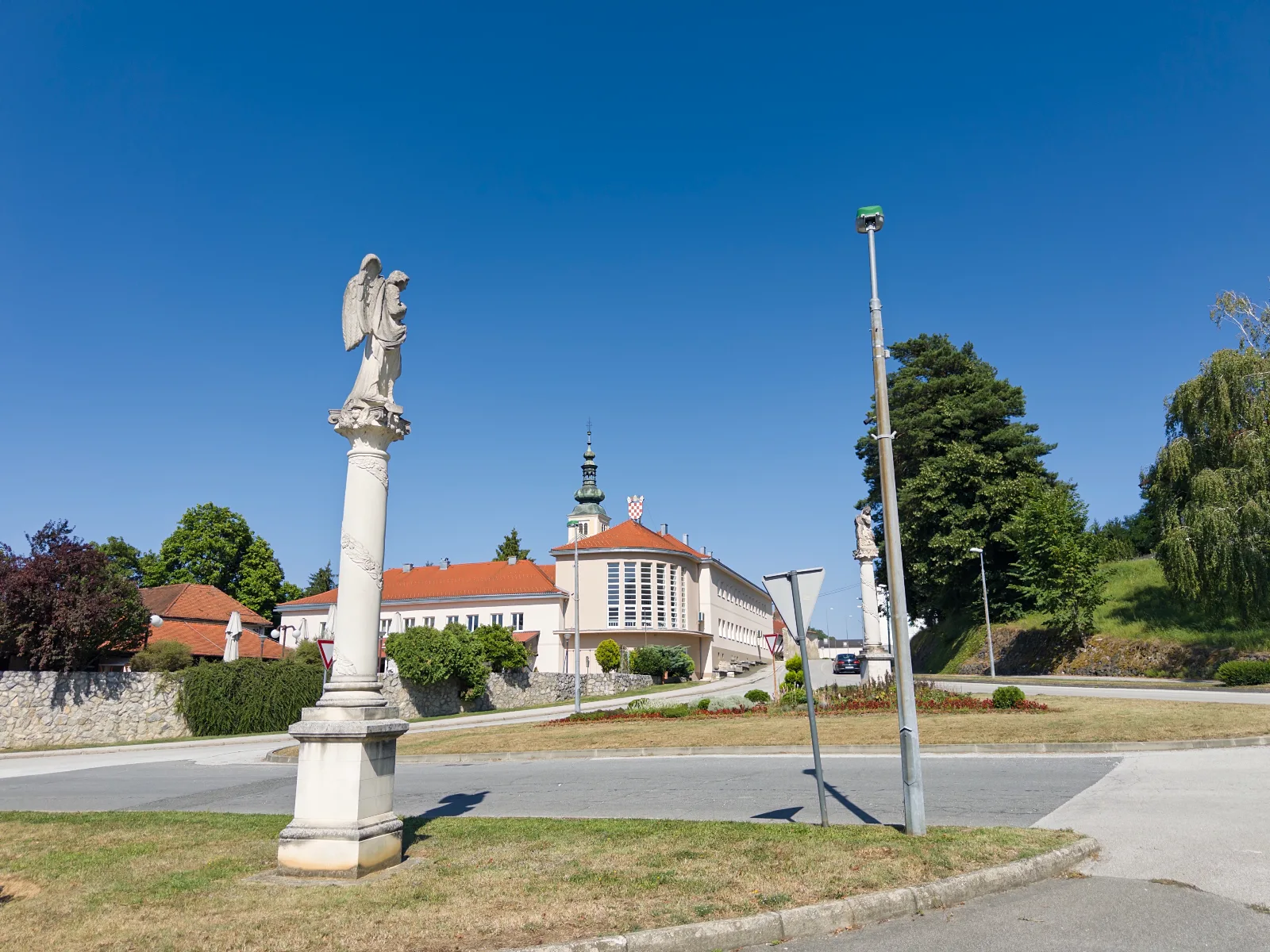
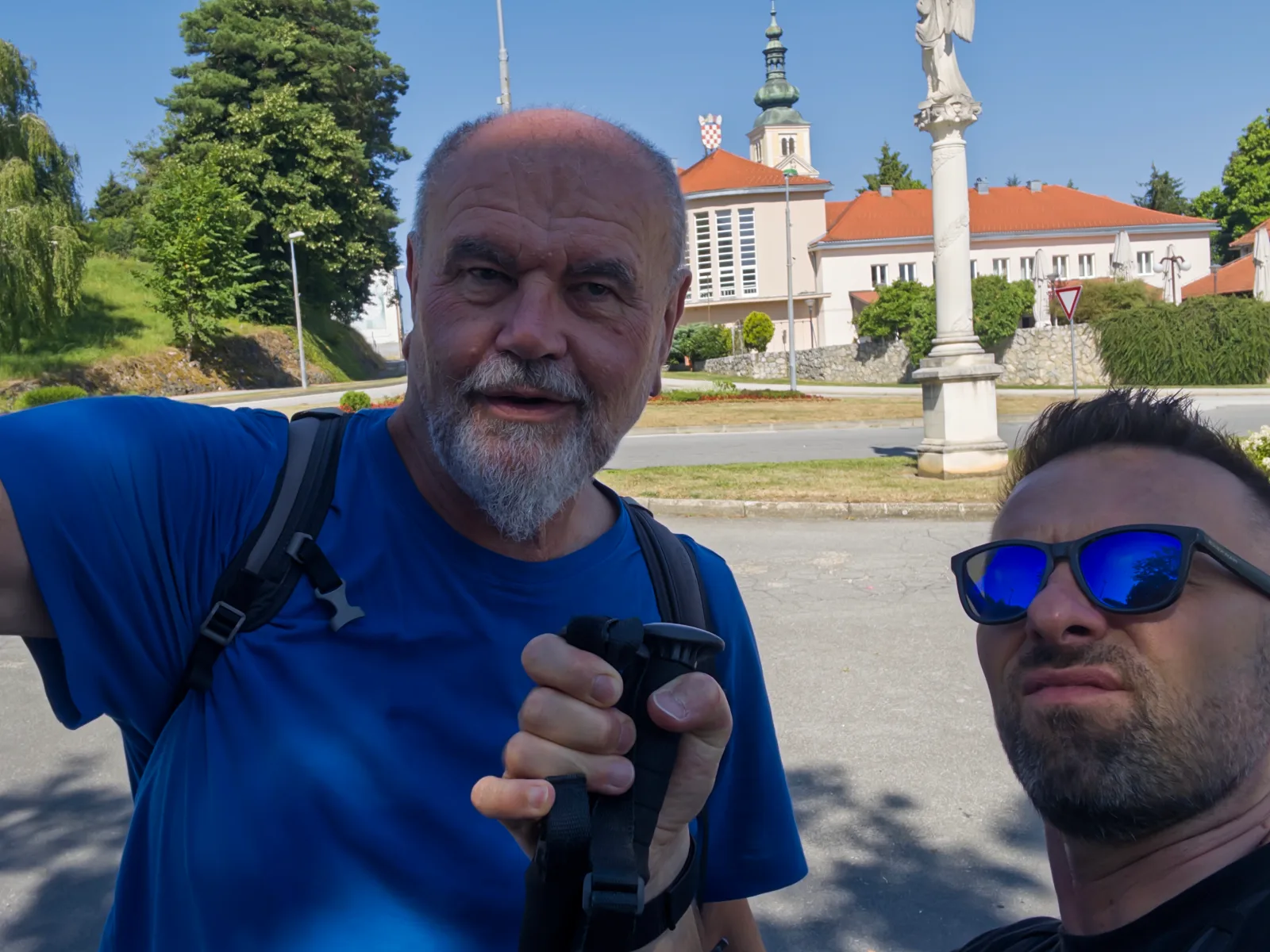
It began in 1399, when King Sigismund gave Herman II of Celje the ruins of the old Lepoglava castle. A year later a Pauline monastery stood on the spot.
The Pauline grammar school opened in 1582, philosophy followed in 1656. In 1674, by decree of Leopold I and Pope Clement X, the Paulines won the right to award doctorates - around seventy-five were defended here, which is why Lepoglava claims the title of Croatia’s first university. Ivan Belostenec was prior from 1627 and wrote his Gazophylacium here. The dictionary was not printed until 1740, sixty-six years after his death.
The parish church holds frescoes by Ivan Krstitelj Ranger and an organ from 1649 - the oldest in Croatia, and still playing. Beneath the main altar lies Ivaniš Korvin, son of Matthias Corvinus, dead of Turkish wounds in 1504 at thirty-two.
The Paulines were dissolved in 1786. The state took the monastery and in 1854 moved a prison into it. Tito served time here from 1929 to 1931, after him Stepinac, after him Tuđman.
And the lace. Bobbin lace, on the UNESCO list since 2009. Zlata Šufflay organised production in the late nineteenth century and brought folk motifs into it; Danica Brossler carried it on after the First World War. Gold in Paris in 1937, bronze in Berlin in 1939. The Paulines brought that too.
The climb
From Lepoglava the trail runs south and climbs without a break for an hour and three quarters. Beech forest, few views, an ordinary Zagorje forest road that simply refuses to stop going up.
We reached the summit of Vilinska špica at 17:33.
And here comes the part nobody warns you about: there is no view from the top. Scrub, bushes, a few trees. The highest point of the whole route, and the only view is the one you make yourself by turning towards Željac and taking the picture.
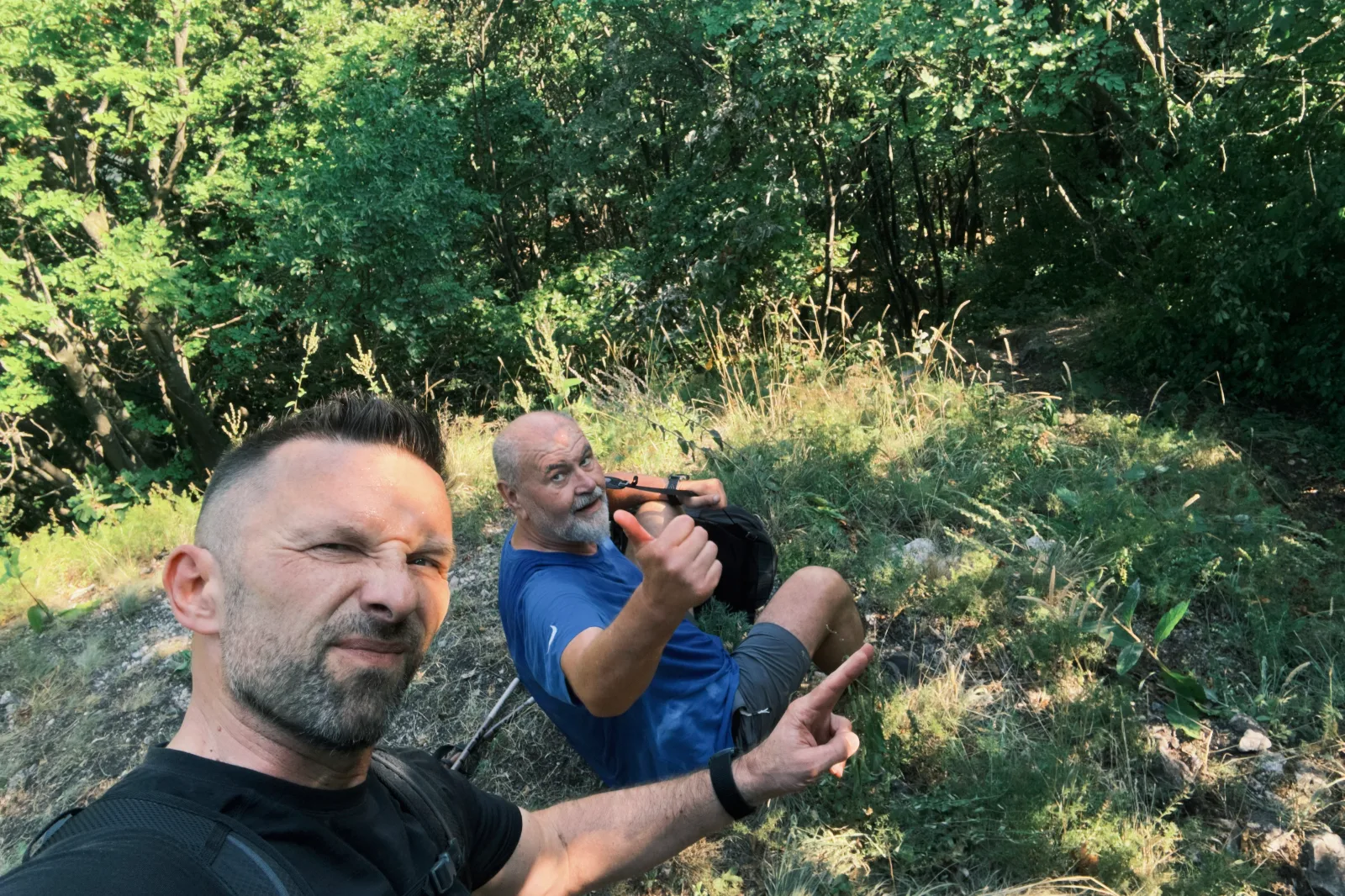
We sat for nine minutes and carried on east along the ridge.
Two lookouts
The reward arrives half an hour late.
At 18:07, on the seventh kilometre, the ridge opens and the whole Bednja valley lies below, with a hill of pale cliffs rising green across the way. This is the part of Zagorje everybody drives through and nobody looks at.
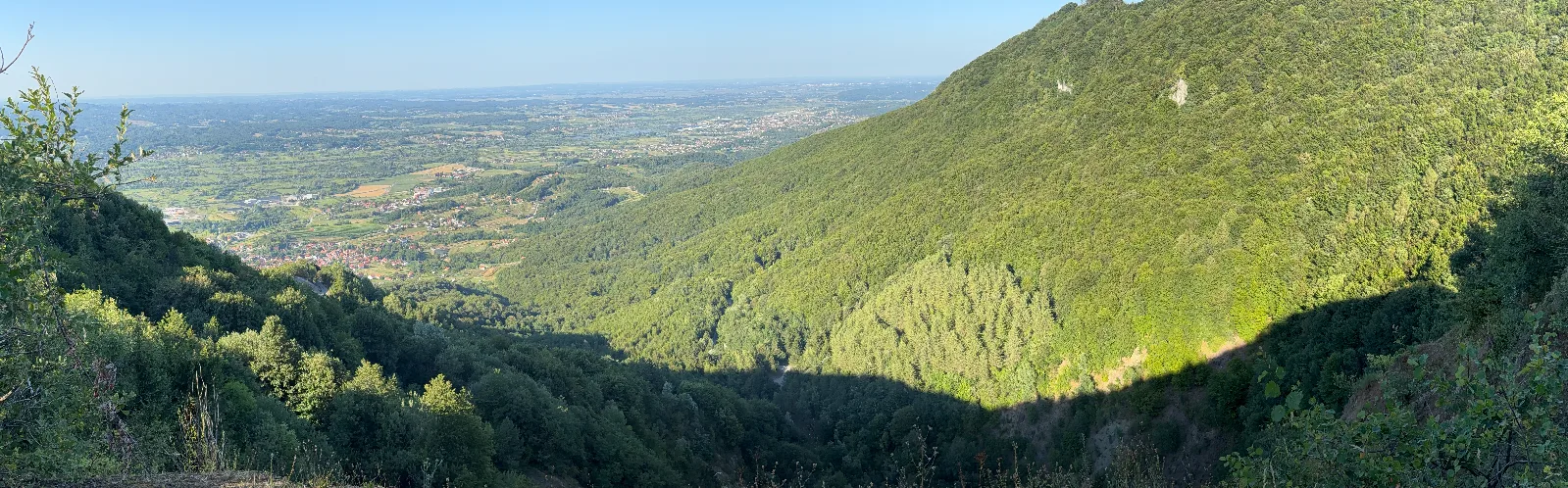
Sixteen minutes on, the second lookout - and the better one. Bare ground, a few dead trees standing upright like posts, and behind them Zagorje all the way to Slovenia. We stayed thirteen minutes, the longest stop of the day. Komoot lists this stretch of ridge as Vudelje and the view of Generalski stol.
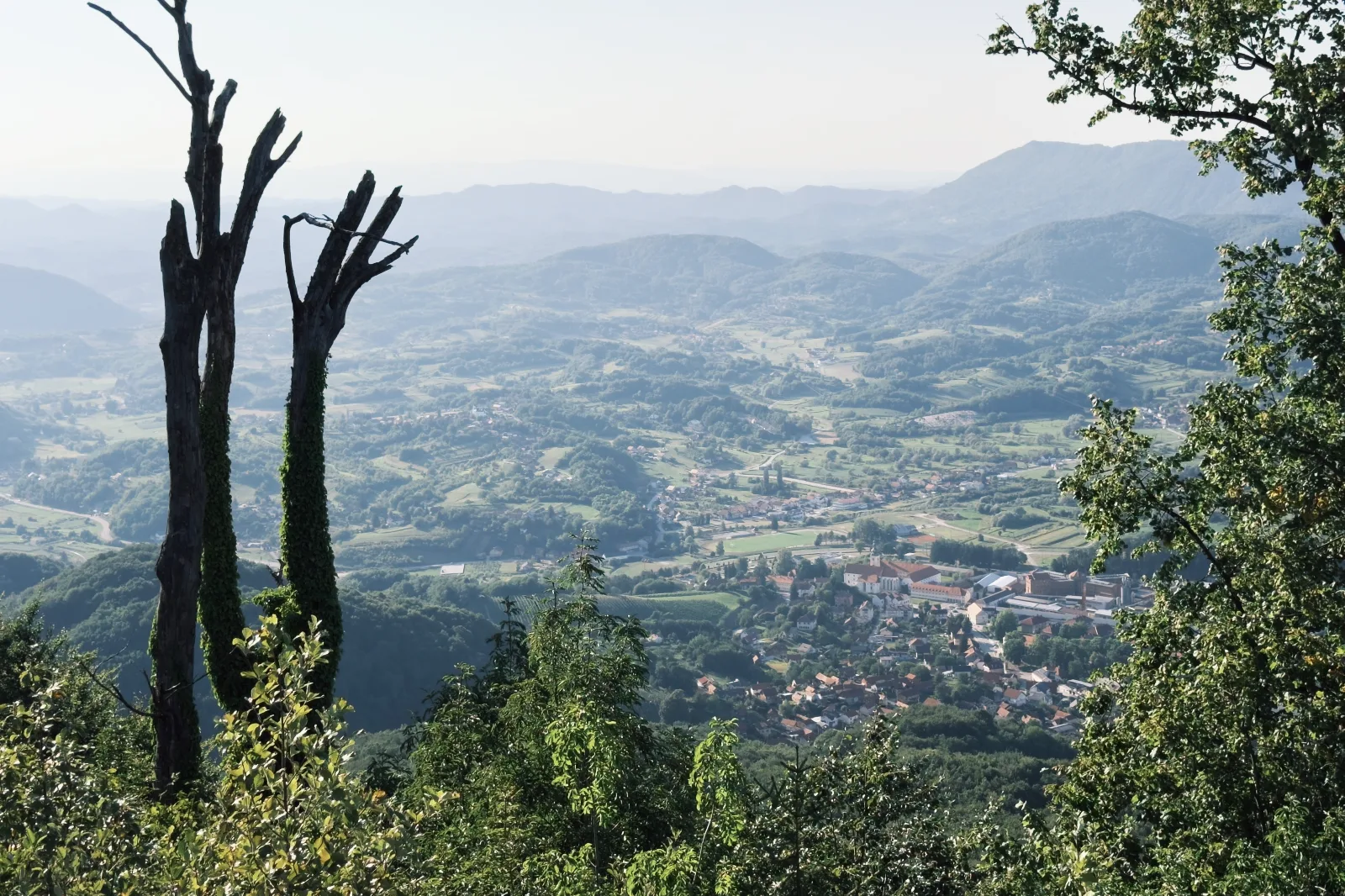
By then the sun had dropped low and everything had turned yellow. Had we started at noon we would have passed through in flat white midday light, and it would not have been anywhere near this.
Gaveznica
The descent is long. We only reached the entrance to Gaveznica at 19:41.
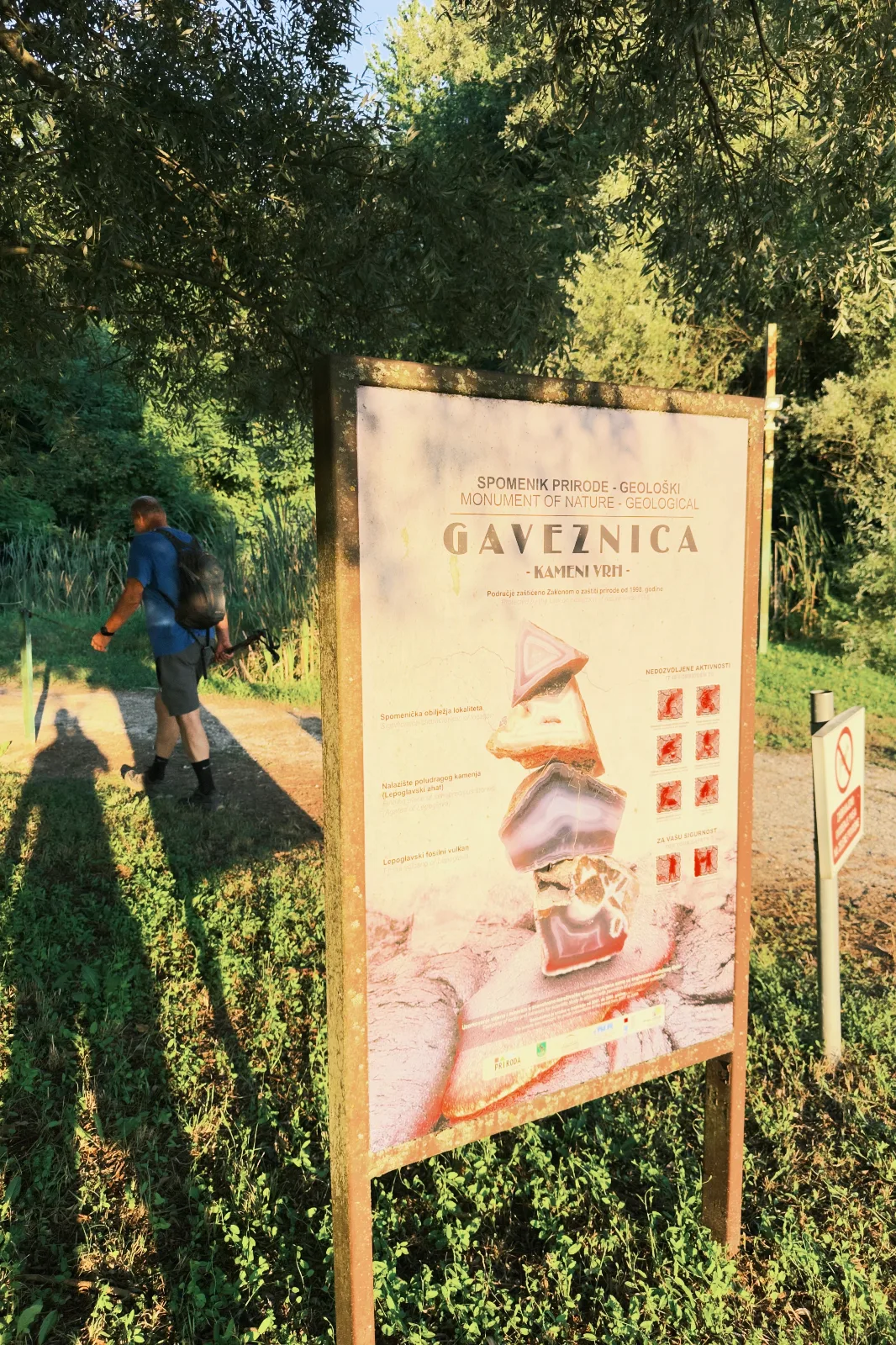
Gaveznica - Kameni vrh is the only preserved fossil volcano in Croatia. It was active roughly twenty-two million years ago, then seas came and went over it, and it stayed sealed under the sediment.
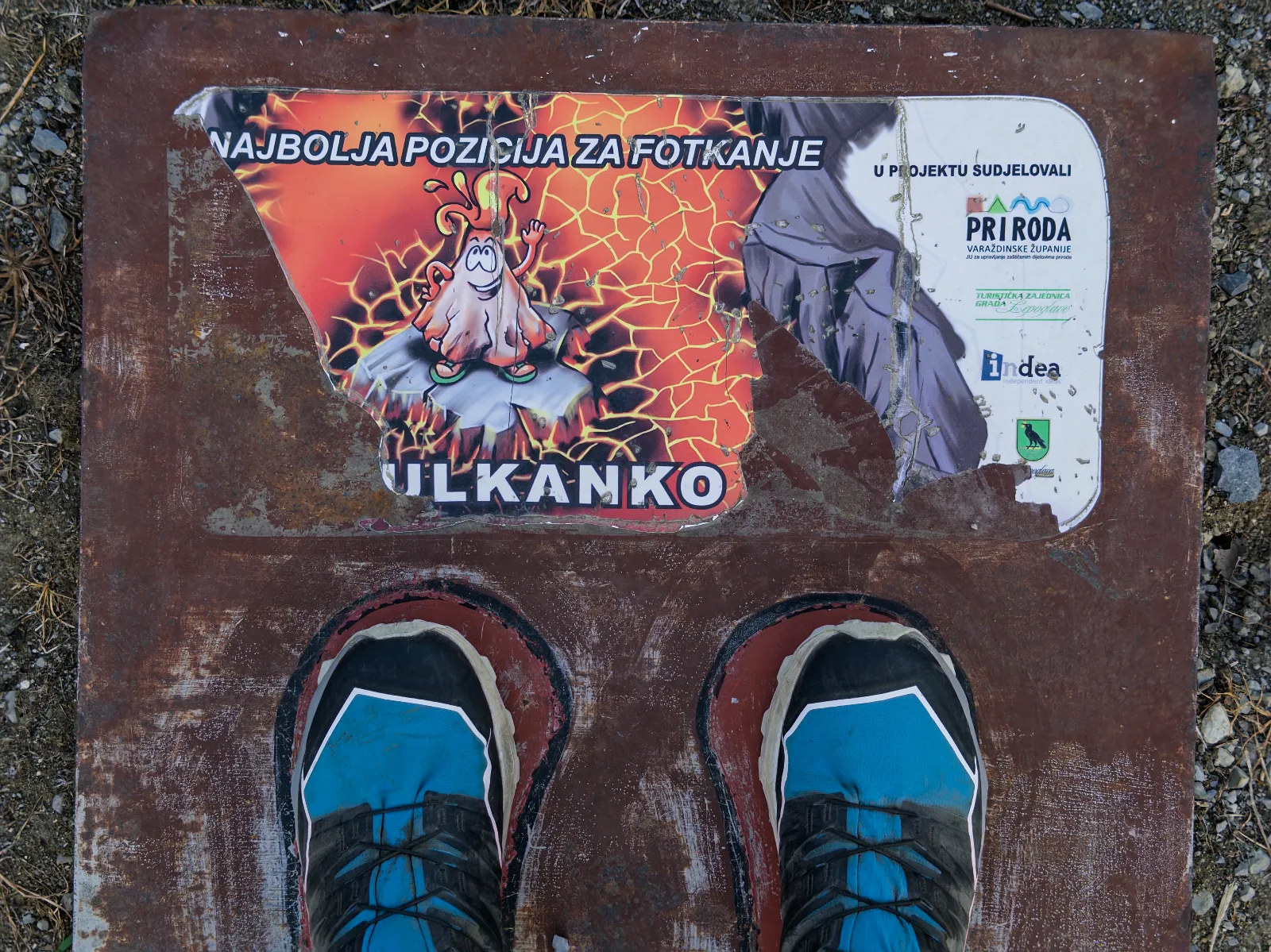
That you can see inside it today is not down to geology but to the prison. From 1923 to 1967 Lepoglava inmates quarried hypersthene andesite here by hand, for road foundations. They dug for forty-four years and, in the process and without knowing it, uncovered the volcanic chimney itself. They carried the hill away and left a hole showing what nobody was ever meant to see.
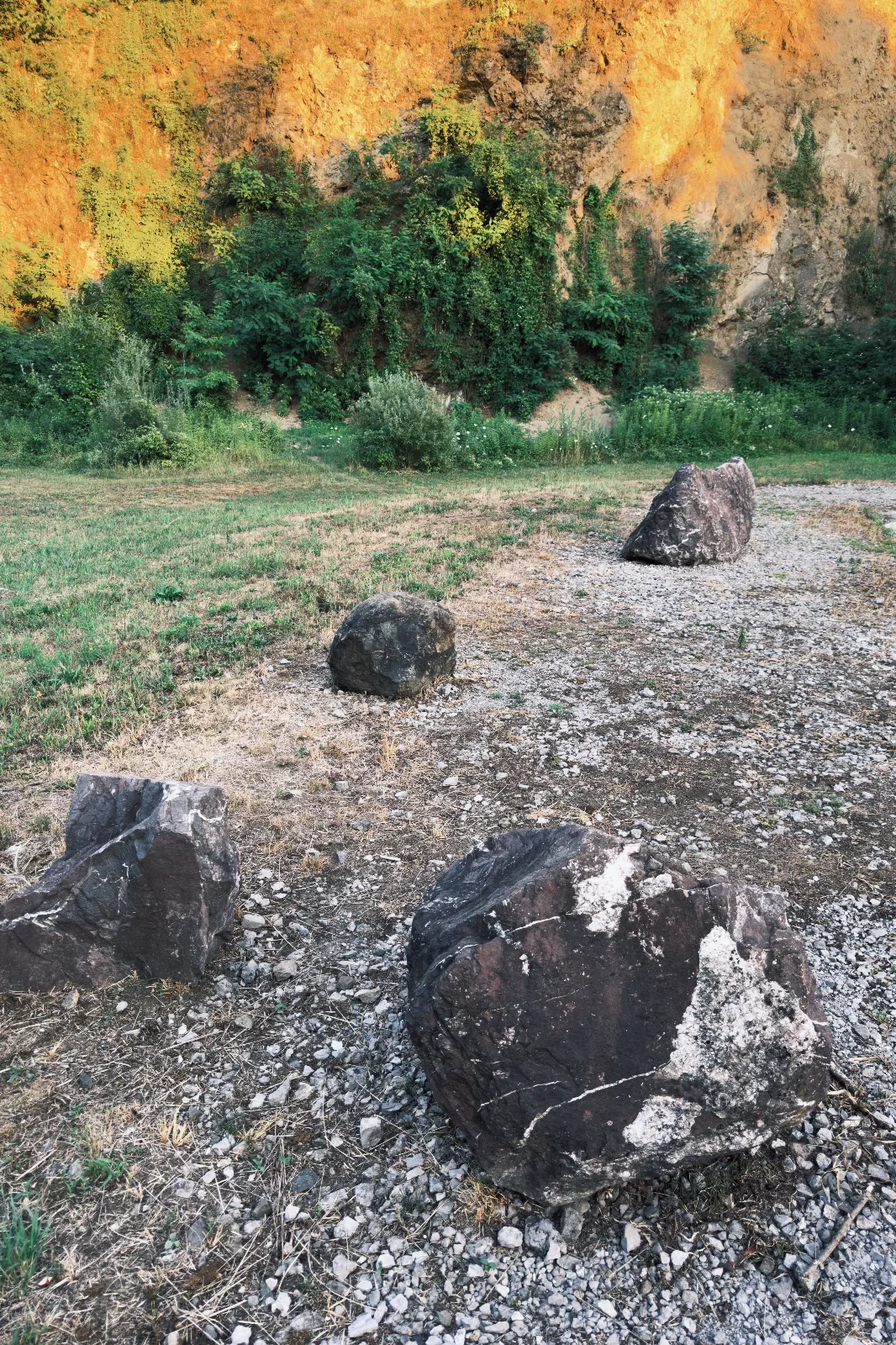
It has been protected since 1998 as Croatia’s sixth geological monument of nature. This is also the only agate site in the country - Lepoglava agate, formed in cavities in the andesite, layer by layer.
At the twelve-and-a-half kilometre mark stands Kameni stup, a panel laying out the history of the Earth by period. If you have children, this is the only chance you will get to show them the Cambrian while they are standing in a crater.
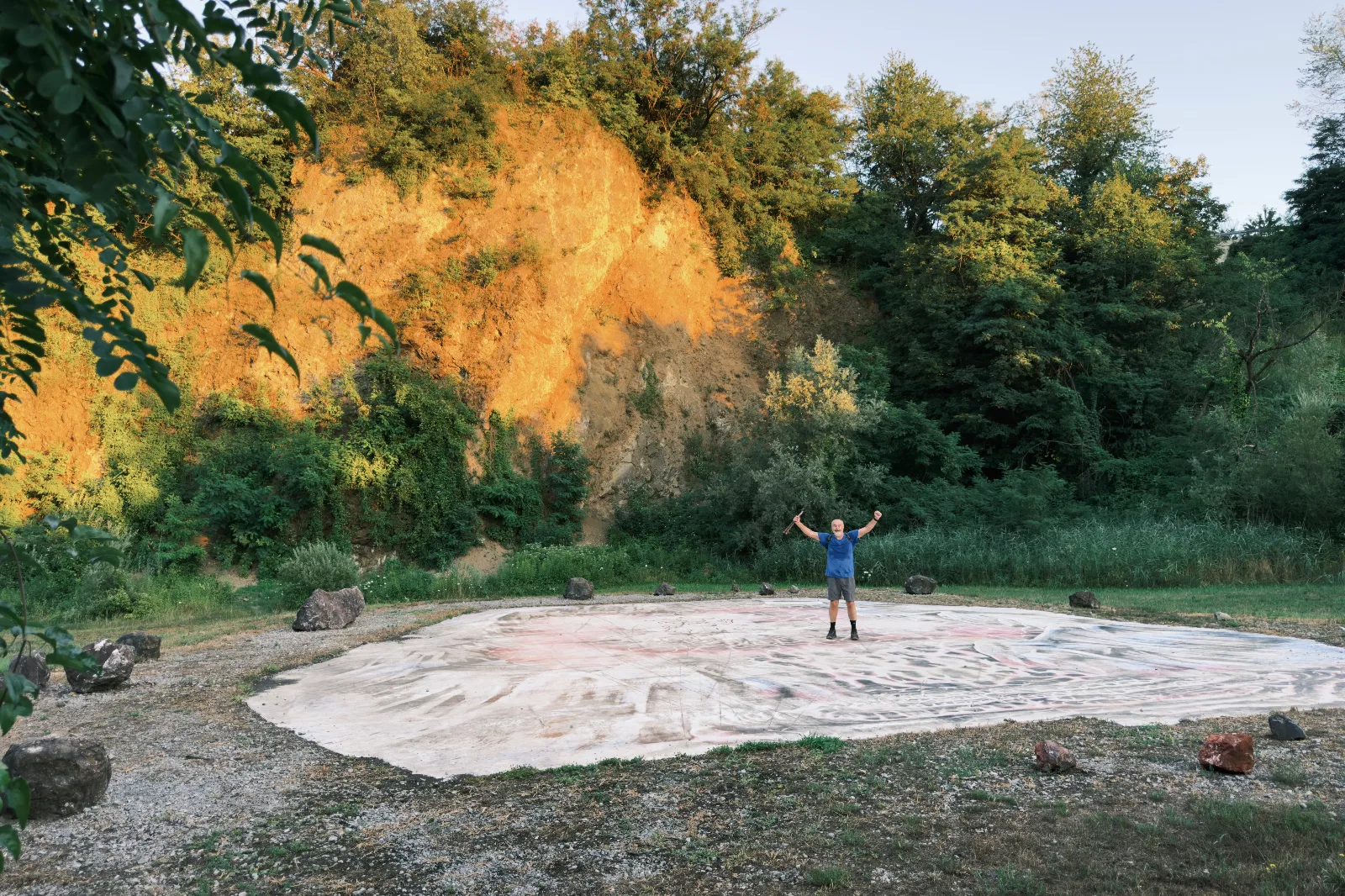
We were back in Lepoglava at 20:16, just in time.