Z'BRDA · TECHNOLOGY
Apple's new wave: the folding iPhone Duo, a variable aperture and a 2 nm chip
10 September 2026 · Nino Ciglenečki & Iris · hrvatski
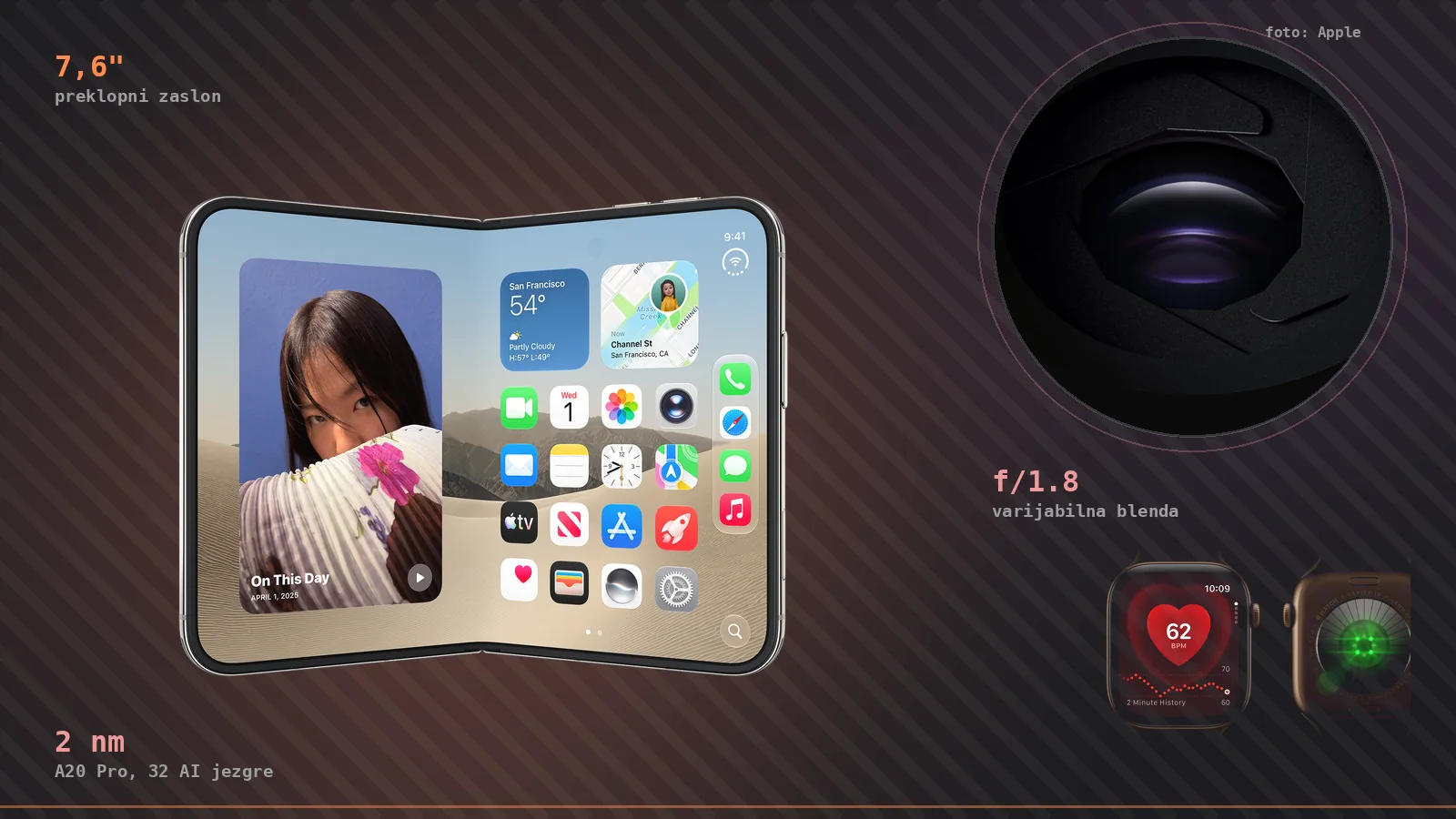
Apple has unveiled the folding iPhone Duo with a 7.6-inch display, the iPhone 18 Pro line with a mechanical aperture, and the first devices running the 2-nanometre A20 Pro processor.
For years, the same complaint has circulated through tech circles: smartphones have hit a wall, and every new generation boils down to cosmetic body polishes and microscopic camera tweaks. The market has grown accustomed to boring, predictable schedules where only color shades and processor model numbers change.
However, Apple’s latest event delivered the largest engineering leap in the last decade - the first foldable iPhone Duo, the 2-nanometer A20 Pro architecture, and a mechanical variable aperture camera.
The undisputed star of the presentation is the iPhone Duo. When folded, the device shares the dimensions of a standard passport with a 5.4-inch outer display that covers ninety percent of a standard Pro screen. But when opened, a massive 7.6-inch Super Retina XDR display unfolds before you - fully fifty percent larger than the display on the 18 Pro Max. The biggest drawback of previous foldable phones was the distracting plastic crease in the middle that warped and accumulated scratches. The solution implemented here relies on a custom nano-texture coating crafted via maskless laser lithography. Every microlens is written pixel by pixel, creating a perceptually flat matte surface that eliminates glare and creases.
The hardware construction relies on an aerospace-grade titanium frame and a custom hinge composed of over one hundred precision components that hold the screen completely flat. For the first time ever, iPhone includes full Apple Pencil support on both displays, while the FaceTime camera is hidden directly beneath the inner display. Touch ID fingerprint recognition is integrated into the side button, and inside lies the new C2 cellular modem delivering up to fifty percent faster upload speeds with fifteen percent lower energy consumption.
In the classic lineup, the iPhone 18 Pro and Pro Max introduce the first mobile processor built on the latest 2-nanometer technology, named the A20 Pro. The chip packs a 6-core CPU featuring new super cores that are twenty percent faster than the previous generation, alongside a new 7-core GPU delivering up to forty percent higher performance in gaming and image generation. To feed this processing power, a second Neural Engine has been added, pushing the total count of AI cores to thirty-two. This provides double the raw compute power for running artificial intelligence locally on the device without sending your private data to external servers.
To sustain this performance without overheating, an entirely new thermal management system was engineered. The silicon die is placed side-by-side with memory and connected directly to a next-generation vapor chamber with de-ionized water cycling through the system. The vapor chamber features three times the surface area of the 17 Pro, delivering up to forty percent higher sustained performance without throttling under load. The battery on the Pro Max model now delivers an impressive 45 hours of video playback, while fast charging recharges up to fifty percent capacity in just fifteen minutes.
The camera’s biggest upgrade is the introduction of a true mechanical variable aperture on the 48-megapixel main sensor. The system consists of six laser-cut blades made from a custom polymer composite, each thinner than a human hair. In dark environments, the aperture automatically opens to f/1.8, allowing fifty percent more light. For advanced photographers, manual Pro controls have been introduced - allowing you to select between four aperture settings, adjust shutter speed, or use Apple Reference Image, which signs photo data at a pixel level as an unalterable digital negative against AI manipulation.
Alongside the phones, the new AirPods 5 were introduced at a $129 price point, offering fifty percent better Active Noise Cancellation (ANC) in an open-ear design, complete with Live Translation and Adaptive Audio. In the smartwatch domain, Apple Watch Series 12 and Ultra 4 are powered by the new S11 chip. The watches now measure heart rate sixty times more frequently - every five seconds - offering a new Readiness score that provides a daily physical capacity assessment based on sleep and HRV. For privacy and convenience, Live Rewind allows users to double-press the Digital Crown to transcribe the last fifteen seconds of spoken conversation.
The fusion of extreme thermal engineering, folding geometry, and local AI processing proves that the smartphone race has moved away from software gimmicks back into pure engineering physics. If you find this technical calculation fascinating, you can watch the entire presentation on the official Apple channel.