Z'BRDA · HEALTH
Supplements that harm: why more is not always better
8 September 2026 · Nino Ciglenečki & Iris · hrvatski
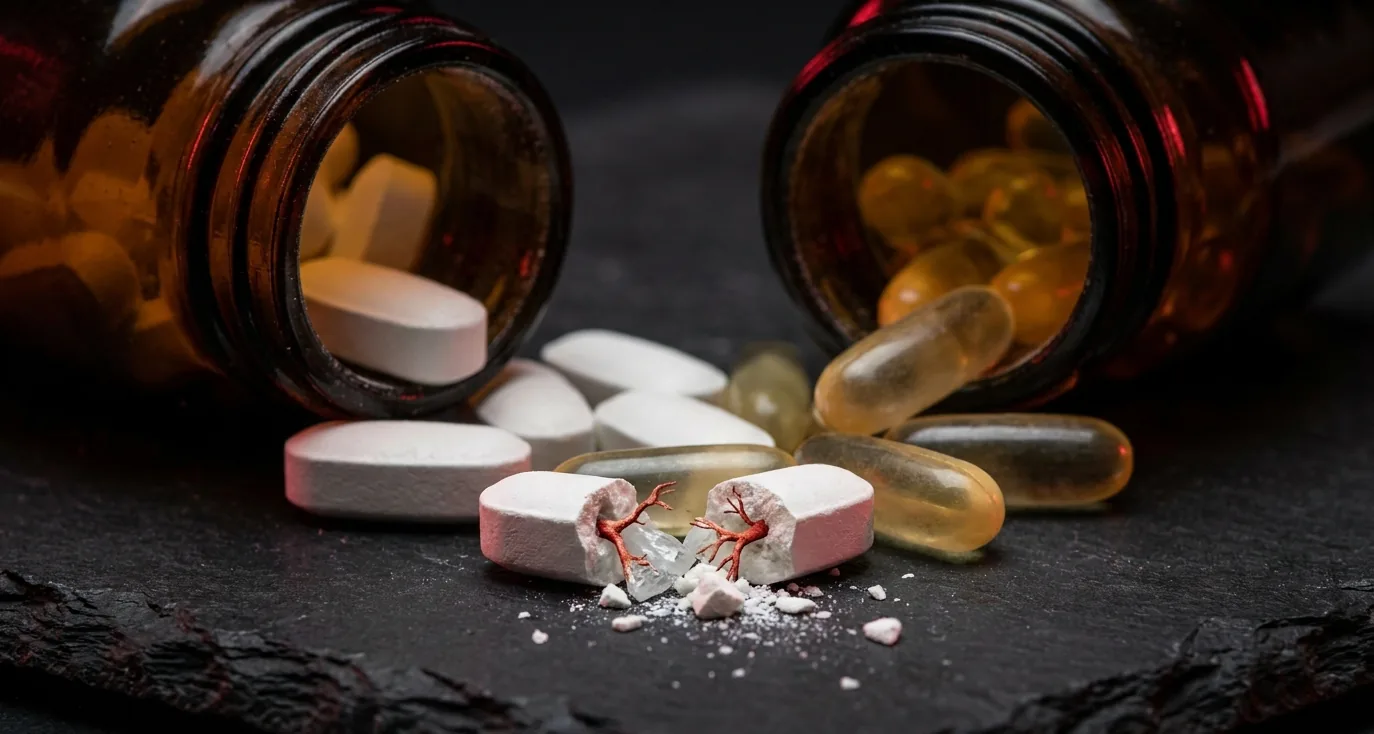
We believe every pill from the pharmacy is an investment in health. Physiology shows that concentrated surges of minerals and vitamins into the bloodstream often do more harm than good.
What actually happens to the calcium you just swallowed? Standing in front of the pharmacy shelves, nobody asks that. Your body is tired, work is pressing on you, so you buy a whole handful of dietary supplements thinking you are doing the best possible thing for your health and blood vessels. Our everyday logic tells us that if something is essential for the body to live, then a concentrated pill of it must be even better and more beneficial.
However, research and clinical practice show that most popular supplements taken blindly in pill form do not protect our organs, but in concentrated surges do more harm than good.
The first and most common trap lies in calcium. For decades we have been hearing that our bones are fragile and that we must drink calcium pills. But when we ingest calcium in the form of a synthetic pill, it enters the bloodstream rapidly and in a huge concentration. The body cannot handle that sudden surge in the blood, so the excess mineral begins to deposit where it does not belong at all - inside the inner walls of our arteries. Measurements show that people who take calcium supplements for years have significantly higher rates of arterial calcification and heart attacks compared to those who do not take them. Calcium from food, such as cheese, sardines, or leafy greens, is absorbed slowly and steadily alongside all necessary co-factors, while a pill arrives like a flood that blood vessels cannot handle.
A similar electrical surge occurs with potassium. Potassium is crucial for heart, nerve, and muscle function, so when people hear that it helps lower blood pressure, they automatically assume a larger dose is better. But while potassium from bananas or beans arrives slowly alongside fiber, a supplement delivers a massive dose all at once. If a person is already taking common blood pressure medications, adding potassium pills can dangerously spike that mineral’s level in the blood. High potassium dangerously taxes heart rhythm, causes muscle weakness, and in severe cases leads to sudden cardiac arrest - without any prior warning symptoms.
With iron, we find a completely different problem - iron does not forgive guesswork. Our body has no simple natural mechanism to excrete excess iron if there is too much of it. Taking iron “just in case” or for occasional fatigue, especially in adult men or postmenopausal women, leads to the accumulation of this metal in the liver and heart. This accumulation generates severe oxidative stress and permanently damages tissues. Iron in pill form should only be taken when blood tests and ferritin levels clearly prove an actual deficiency.
Perhaps the best lesson about the illusion of supplements comes from the story of niacin, or vitamin B3. Niacin was prescribed for years because on paper it did a fantastic thing - it lowered bad cholesterol and raised good cholesterol. Laboratory results looked perfect. But when scientists conducted massive trials on hundreds of thousands of people, they discovered a devastating truth. Niacin improves numbers on paper, but in real life it did not reduce the number of heart attacks or strokes at all. Instead, high doses of niacin caused liver damage and severely disrupted blood sugar regulation. Improving a number on paper does not mean saving a human life.
Even highly popular turmeric in the form of high-dose curcumin capsules carries serious risks. While turmeric as a food spice is completely safe, high doses of isolated curcumin suppress the body’s natural adaptation process. Our organism grows stronger precisely through small doses of stress - exercise creates microscopic damage and oxidation in muscles that signal the body to repair and become stronger. When we flood the system with mega-doses of synthetic antioxidants, we actually erase that renewal signal and cancel out a good portion of the benefits from strength training and running.
Standing in front of a shelf of miracle bottles, it is worth remembering that health is not bought in concentrated surges. True strength comes from real food that delivers nutrients slowly and exactly as physiology intended.
The occasion for this piece was a video on the Dr. Mitch Rice channel. The figures and findings it rests on are in the studies linked below.
links